
- FastAPI and Python services
- PostgreSQL and Supabase
- Firebase where it fits
- APIs for mobile and web clients
In production
Backends powering live products
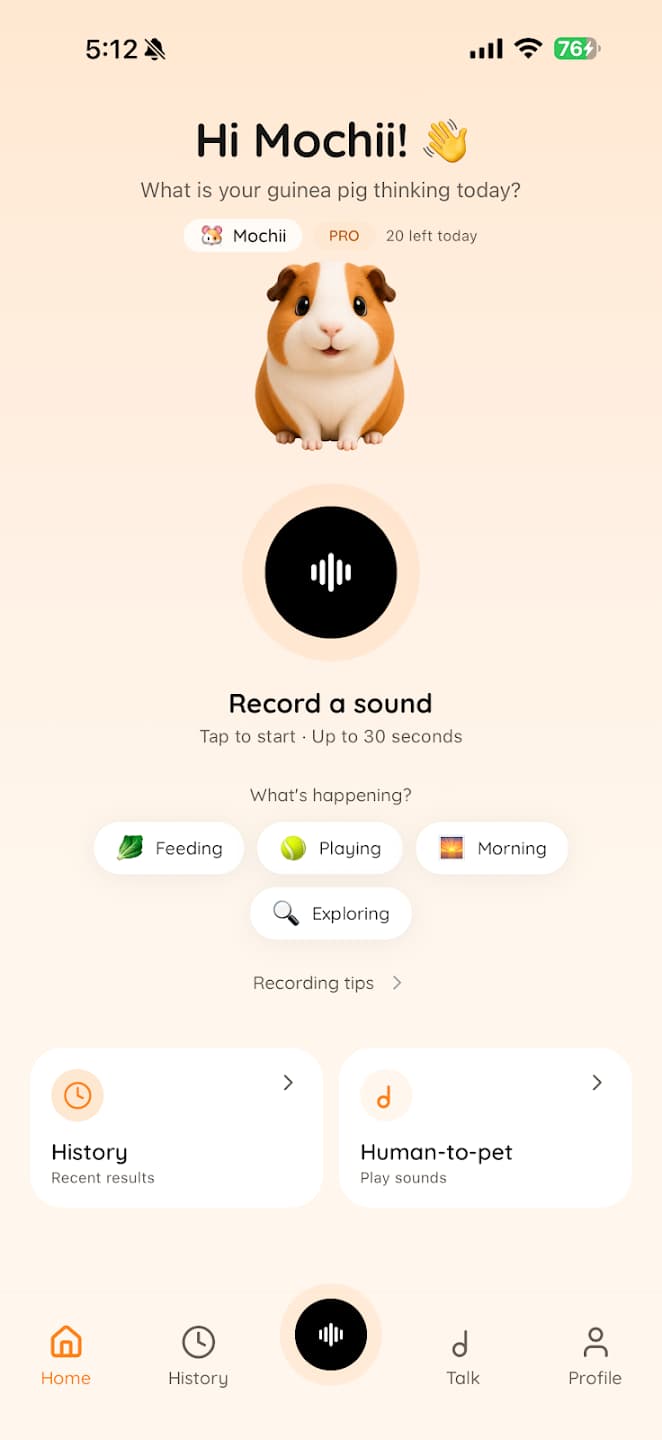

Guinea Pig Translator
Mobile appRecord guinea pig sounds and get playful AI translations — with optional subscriptions on iPhone and Android.
React NativeFastAPIOpenAISupabaseRevenueCat

aeo — AI Visibility Growth System
When AI picks a winner, make it you. Grow your AI visibility with measurable results.
tryaeo.com


TryAEO
Web appAI visibility SaaS that crawls your site, scores how well you show up in AI search, and delivers a free report by email.
Next.jsSupabaseLangChainInngestApify
Visit TryAEOStack-aware delivery
What we build on the server
Architecture and stack selection
When to use FastAPI on Postgres, Supabase for speed, or Firebase for mobile-centric auth and realtime — documented with reasoning.
REST and typed API design
Versioned endpoints, validation, error contracts, and OpenAPI documentation your client teams can rely on.
Authentication and authorization
User accounts, roles, service-to-service auth, and secure token handling suited to your clients.
Data modeling and migrations
Schema design, indexing, migration strategy, and backup considerations for PostgreSQL and Supabase.
Background jobs and integrations
Webhooks, queues, scheduled tasks, and third-party APIs — Stripe, email, AI providers, and internal tools.
Observability and deployment
Logging, health checks, environment separation, and deployment patterns that support production operations.
Is this the right fit?
Strong fit
- Your mobile or web app needs a real backend — not hard-coded JSON in the client
- You want FastAPI, Postgres, Supabase, or Firebase chosen for maintainability, not hype
- Integrations include payments, AI APIs, webhooks, or multi-tenant data
- You need an API your future team can extend without archaeology
- An existing backend needs refactoring, documentation, or scaling fixes
Probably not the right fit
- You only need a static marketing site with a contact form
- You want every stack option treated as the same price and timeline
- You require on-prem enterprise Java or .NET maintenance with no greenfield work
- You cannot provide requirements for auth, data ownership, or compliance basics
Backend delivery process
01
Map requirements and constraints
Clients, data model, compliance, traffic expectations, and which managed services reduce operational risk.
02
Design API and data layer
Endpoints, schemas, auth model, and migration approach agreed before implementation.
03
Implement and integrate
Build services, connect mobile or web clients, and wire third-party providers with test coverage on critical paths.
04
Deploy and operate
Staging and production environments, monitoring basics, and handover docs for your team.
Engagement shape
After a short call, we will tell you whether the project needs a paid discovery, a focused sprint or a full build.
Client words
What teams say after shipping
“I started with nothing — no app, no store listing. About a month later the app was live on iPhone and Android, taking payments, and people were actually using it. I didn't think that was possible on my timeline.”
“We had the vision for tryaeo.com but not the bandwidth to build it right. They turned it into a real product our customers rely on — not something we have to babysit every week.”
FAQ
Common questions
Discuss your backend
Describe your clients, data, and integrations. We will reply within one business day with sensible stack options and next steps.